The Feedback Timing Problem: How Delayed Reviews Undermine the Behavioral Change Organizations Are Paying For
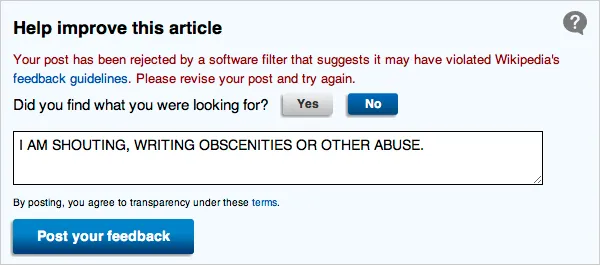
Photo: Fabrice Florin, product manager for Wikimedia Foundation, CC BY-SA 3.0, via Wikimedia Commons
A Question of Timing
Organizations spend considerable resources designing performance review systems — calibrating rating scales, training managers, building competency rubrics, and scheduling evaluation cycles. Yet one of the most consequential variables in the entire feedback process receives relatively little attention in those design conversations: the interval between when a behavior occurs and when the employee receives a response to it.
That interval — what researchers in organizational psychology refer to as response lag — turns out to matter quite a lot. And the growing body of evidence on feedback timing is prompting a meaningful reassessment of how enterprises structure their evaluation cadence.
What the Research Is Telling Us
Behavioral science has long established that the reinforcement value of feedback diminishes as the distance between action and response increases. This principle, well-documented in learning theory, translates directly to workplace performance contexts in ways that have practical implications for how organizations allocate their assessment resources.
A 2022 analysis published in the Journal of Applied Psychology found that employees who received feedback within 24 to 48 hours of a performance event demonstrated statistically significant improvements in the targeted behavior compared to a control group receiving equivalent feedback at a standard quarterly interval. The effect was most pronounced for early-tenure employees and for complex tasks requiring iterative skill development.
Separate research from Gallup's ongoing workplace engagement studies has consistently found that employees who report receiving frequent, meaningful feedback — defined as at least weekly touchpoints with their direct manager — are nearly three times more likely to be engaged than those operating under quarterly or annual review structures.
The implication is not subtle: the timing of feedback is not merely a logistical preference. It is a determinant of whether that feedback produces behavioral change at all.
The Quarterly Check-In: What It Gets Right and Where It Falls Short
Periodic review cycles — whether quarterly, semi-annual, or annual — offer real organizational advantages that should not be dismissed. They create structured documentation trails, enable performance-based compensation decisions, and provide a formal mechanism for goal alignment between employees and the organization. For compliance-sensitive industries, they fulfill regulatory and legal requirements around performance documentation.
But periodic reviews are fundamentally retrospective instruments. By the time a manager and employee sit down for a quarterly check-in, the specific incidents being discussed may be weeks old. The emotional context has faded. The opportunity for course correction has, in many cases, already passed. The employee may have repeated the same suboptimal behavior dozens of times in the intervening weeks — each repetition reinforcing a pattern that the delayed feedback is now attempting to reverse.
This is the core limitation of low-frequency review cycles: they measure performance accurately enough, but they intervene in behavioral patterns too late to be maximally effective as development tools.
Continuous Feedback in Practice: What Enterprise Implementation Actually Looks Like
The phrase "real-time feedback" can evoke images of constant interruption and surveillance-adjacent monitoring — neither of which reflects what effective continuous assessment actually looks like in well-designed enterprise environments.
In practice, high-performing organizations are implementing structured micro-feedback touchpoints that are brief, specific, and tied to observable behaviors rather than global performance impressions. These are not informal hallway conversations. They are structured, documented interactions — often supported by purpose-built platforms — that capture specific behavioral observations in close proximity to the triggering event.
A national professional services firm operating across twelve U.S. markets piloted a continuous feedback model across one of its regional divisions in 2023, pairing weekly five-minute structured check-ins with a digital feedback platform that allowed both managers and peers to log specific behavioral observations within 48 hours of relevant interactions. The pilot division showed a 27 percent improvement in goal attainment rates over two quarters compared to the prior year, while the control division — continuing on a quarterly review cycle — showed a 4 percent improvement over the same period.
The difference, managers reported, was not the amount of feedback but the actionability of it. Employees were receiving information while the relevant context was still fresh, which allowed them to make targeted adjustments before patterns became entrenched.
Addressing the Implementation Barriers That Derail Most Rollouts
Despite the evidence, continuous feedback initiatives fail at a discouraging rate — not because the model is flawed, but because organizations underestimate the change management requirements involved in shifting from periodic to frequent evaluation cultures.
Manager capacity is the most commonly cited barrier. Asking already-stretched managers to conduct meaningful weekly touchpoints on top of existing responsibilities is a legitimate concern, and organizations that ignore it tend to see feedback quality deteriorate rapidly as the initiative scales.
Successful implementations address this through two parallel investments. First, they reduce the structural burden of each touchpoint by standardizing formats, limiting scope to one or two behavioral focus areas per session, and integrating feedback logging directly into existing workflow tools rather than requiring separate platform navigation. Second, they invest in manager capability development — specifically, training managers to deliver specific, non-evaluative behavioral feedback rather than the vague, impression-based commentary that characterizes most informal feedback exchanges.
Technology platforms have matured considerably in this space. Tools that integrate with project management systems, communication platforms, and HR information systems can surface behavioral data in near-real time, reduce administrative friction, and create the documentation trail that compliance and compensation processes require — without anchoring the entire feedback function to a calendar event that occurs four times a year.
Measuring the ROI of Feedback Frequency
For organizations evaluating whether to invest in continuous feedback infrastructure, the ROI case rests on several measurable variables: reduced time-to-competency for new hires, lower rates of performance-related turnover, faster behavioral correction cycles, and improved engagement scores among high-potential employees who consistently cite meaningful feedback as a retention factor.
The cost of delayed feedback is diffuse and largely invisible in standard financial reporting. But when organizations begin tracking performance trajectory data alongside feedback cadence data, the relationship between the two becomes difficult to ignore.
The question is no longer whether frequent feedback outperforms periodic review as a behavioral change mechanism. The research on that point is increasingly settled. The question is whether your organization is structured to deliver it — and whether the investment in getting there is one you can afford to defer.