Why Your Strongest Employees Stop Growing: The Hidden Gaps Assessment Can Finally Expose

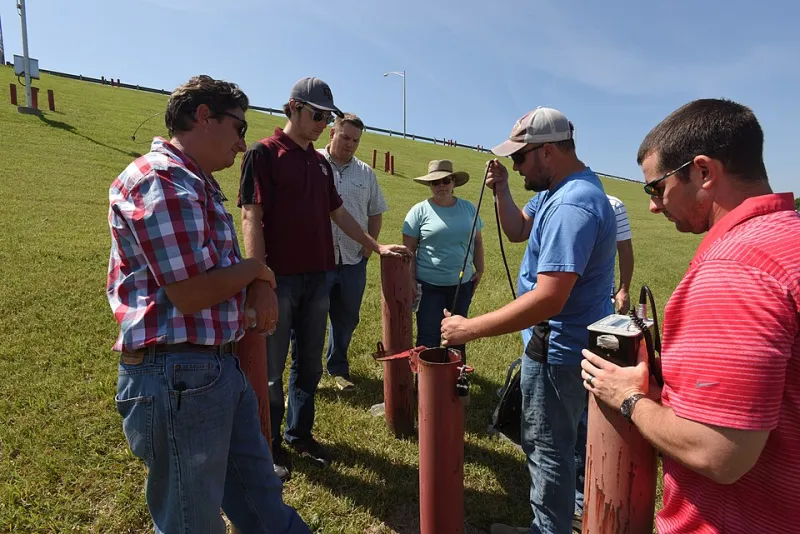
Photo: armyrotcpao, Public domain, via Wikimedia Commons
The Paradox of the Perpetual High Performer
Every organization has them: the employees who reliably exceed expectations, earn glowing annual reviews, and serve as informal benchmarks for their peers. Yet somewhere between their third strong evaluation and their fifth year with the company, something shifts. Their output levels off. Promotions pass them by. Managers describe them as "solid" but struggle to articulate a path forward. The employee, sensing the stagnation, begins quietly exploring other options.
This pattern is so common it has earned a quiet acceptance in corporate culture. But acceptance is not the same as understanding—and understanding is precisely what most organizations lack. The plateau is not an inevitability. It is, in most cases, a measurement failure.
What Traditional Assessments Are Actually Measuring
Conventional performance reviews are built around a relatively narrow set of criteria: goal attainment, behavioral competencies as defined by a role's job description, and manager perception. These dimensions are useful. They are not sufficient.
What they consistently fail to capture is the distinction between performing well within a known context and possessing the capacity to operate effectively in a new one. An employee who excels at executing established processes may have significant underdeveloped potential in strategic thinking, ambiguity tolerance, or cross-functional influence. Because traditional assessments rarely probe these dimensions, the gaps go undetected—not because they are invisible, but because the instrument being used was never designed to find them.
The result is what might be called the competency illusion: the appearance of comprehensive evaluation masking a fundamentally incomplete picture of an employee's actual capability profile.
Three Hidden Deficits That Standard Reviews Miss
Learning agility—the ability to absorb novel information, apply lessons from unfamiliar situations, and adapt rapidly under pressure—is one of the strongest predictors of long-term leadership effectiveness. Research from the human capital field consistently identifies it as a differentiating trait among executives who continue to grow versus those who stagnate at the director or VP level. Yet most performance review templates contain no mechanism for assessing it. An employee's history of learning agility is buried in anecdotes, if it surfaces at all.
Adaptability Under Complexity
Organizations promote people into increasingly complex environments. The skills that produced success in a structured individual contributor role—precision, process adherence, technical mastery—do not automatically transfer to roles requiring stakeholder navigation, strategic trade-off analysis, or team development. Without assessment tools specifically designed to surface how an employee responds to escalating complexity, organizations are essentially promoting based on past performance in a different job.
Interpersonal Influence and Executive Presence
Many high performers who plateau do so not because they lack intelligence or effort, but because they have not developed the relational skills that senior roles demand. These include the ability to persuade without authority, manage upward effectively, and project credibility across organizational levels. These competencies are observable and measurable—but they require a more sophisticated assessment architecture than most annual review cycles provide.
Building an Assessment Framework That Goes Deeper
Breaking through the plateau requires a deliberate shift in evaluation philosophy: from measuring what an employee has done to mapping what an employee is capable of becoming.
This shift involves several concrete structural changes.
Multi-Source Capability Mapping
Rather than relying solely on manager observation, organizations benefit from aggregating input across multiple vantage points—peers, direct reports, cross-functional partners, and project stakeholders. This broader data set reveals patterns in how an employee operates across different relational contexts, which is precisely where growth potential tends to manifest or stall.
Scenario-Based and Behavioral Assessment
Structured behavioral interviews and simulation-based assessments place employees in scenarios that approximate the complexity of the next-level role. How does a senior analyst respond when asked to defend a strategic recommendation to a skeptical executive audience? How does a team lead handle a situation where two high-priority projects compete for the same limited resources? These scenarios generate behavioral data that no retrospective review can produce.
Learning Agility Diagnostics
Proprietary and validated psychometric tools exist specifically to measure learning agility across its component dimensions—mental agility, people agility, change agility, and results agility. Incorporating these instruments into a development-focused assessment cycle gives organizations a quantified baseline from which targeted growth plans can be built.
Individual Development Plans Tied to Assessment Data
The most common failure point in employee development is not the absence of a development plan—it is the absence of a plan grounded in actual assessment findings. When development goals are derived from vague manager impressions rather than structured diagnostic data, they tend to be generic, poorly prioritized, and disconnected from the specific gaps standing between an employee and the next level of contribution.
Turning Insight Into Organizational Momentum
The business case for assessment-driven development extends well beyond individual career satisfaction. When organizations systematically identify and cultivate the latent capabilities of their strongest employees, several measurable outcomes follow.
Internal promotion pipelines deepen, reducing dependence on costly external hiring for senior roles. Retention among high-potential employees improves, because those employees experience the tangible evidence that the organization is investing in their future rather than simply extracting value from their present. And organizational capability expands in ways that are difficult to replicate through hiring alone—because the employees being developed already carry institutional knowledge, cultural fluency, and stakeholder relationships that external candidates cannot bring on day one.
The plateau, in other words, is not just a problem for the employee experiencing it. It is a signal that the organization's assessment infrastructure is leaving value on the table.
Redefining What a Strong Evaluation Actually Measures
Organizations that commit to assessment-driven development are making a structural argument: that performance evaluation is not a compliance exercise or a documentation ritual, but a strategic tool for understanding human capital at its most granular level.
For the high performer who has quietly wondered why strong reviews have not translated into meaningful advancement, this shift is significant. It means that the ceiling they have been pressing against is not a reflection of their limits—it is a reflection of the organization's limited visibility into those limits.
The ceiling, properly assessed, tends to disappear. What remains is a clear pathway, built from evidence, toward the next level of contribution—for the employee and for the enterprise that depends on them.